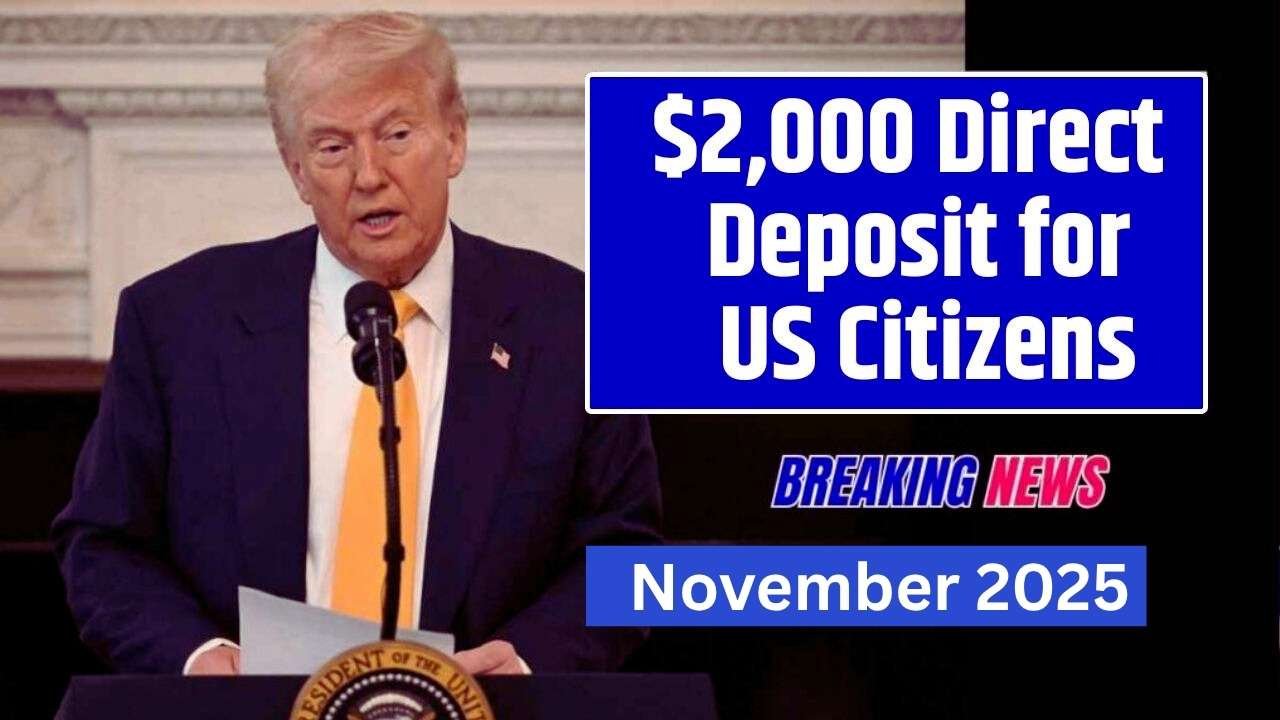
Hey everyone, with the holidays right around the corner and wallets feeling a little lighter than usual, the buzz about a $2,000 direct deposit hitting U.S. citizens’ accounts in November 2025 has everyone’s attention. President Trump reignited the conversation with his recent Truth Social post about a “tariff dividend” of at least $2,000 per person, funded by import tariffs. But hold up is this actually confirmed and rolling out this month, or just more hype? As of November 25, 2025, let’s cut through the noise with the latest facts so you can figure out if you’re in line for some extra cash and when it might show up.
The Scoop on the $2,000 Direct Deposit: Confirmed or Clickbait?
Straight talk: Despite viral posts and sketchy websites screaming “confirmed for November,” the IRS and Treasury Department are clear no new federal stimulus checks are authorized or scheduled for this month. Trump’s proposal, floated on November 9, ties the payments to revenue from tariffs on countries like China and Mexico, which have already brought in over $80 billion this year. He called it a “dividend” to everyday Americans, excluding high earners, to pay down debt and boost the economy. But here’s the catch: Congress hasn’t greenlit it yet, and experts like those at the Committee for a Responsible Federal Budget say it’d cost $450-600 billion double what tariffs might cover after other priorities.
This isn’t the first rodeo. Back in July, Senator Josh Hawley’s American Worker Rebate Act pitched similar checks ($600-$2,400 based on family size), and October saw Rep. Ro Khanna float a $2,000 idea for under-$100k households. Both stalled. The White House says they’re “committed,” but no timeline beyond “sometime in 2026” before midterms. Scammers are loving this fake texts promising “claim your $2,000 now” are everywhere, but the IRS only contacts by mail.
Why This Could Still Happen (And Why It Might Not)
If it does pass, it’d be a lifeline amid 2.1% GDP growth and sticky inflation, putting cash where it’s needed without the full-blown stimulus hangover from 2021. Treasury Secretary Scott Bessent even suggested it could morph into tax breaks like no tax on tips or overtime, not just checks. Tariffs are projected to rake in $158 billion in 2025 and $207 billion in 2026, per the Tax Foundation enough to spark real debate.
But hurdles abound: Bipartisan support is iffy, and tariffs could hike prices on imports by 0.5-1%, nibbling at the check’s value. Plus, with no recession, extra spending might just fan inflation flames. Fact-checkers like FactCheck.org debunked bogus “phased November deposits” claims as pure fiction.
- Pro Side: Quick economic jolt past checks saw 40% spent on essentials like food and bills.
- Con Side: Logistics nightmare; pandemic rollouts took weeks, and non-filers had to jump through hoops.
Who Might Qualify? A Quick Eligibility Rundown
No final rules since it’s not law, but drawing from Trump’s post and past programs like Hawley’s bill, here’s the likely lineup:
- Core Group: U.S. Citizens and Lawful Residents: Need a valid Social Security Number (SSN) or ITIN; green card holders might sneak in, but dependents usually sit it out.
- Income Caps: Aimed at “middle and lower-income” think under $100,000 for individuals or $200,000 for families, per Bessent’s hints. High earners phase out, no hard cutoff to avoid cliffs.
- Family Perks: Extra for kids up to $2,400 total in some versions, prorated by income. Benefits like Social Security or SSI won’t get dinged.
- Non-Filers Beware: If you didn’t file 2024 taxes, you’d need a simple return to prove eligibility. Automatic for most via IRS data.
States are stepping up too places like California and New York have their own rebates, but that’s separate from federal action.
Payment Dates and How It Would Hit Your Account
Dream scenario: Bill passes December 2025, direct deposits start early 2026 (think January waves, like 2020’s two-week turnaround). Paper checks? Add 4-6 weeks. No November magic Trump himself nixed holiday timing.
- Tracking Tip: Once live, hit up IRS.gov’s “Where’s My Refund?” tool with your SSN, filing status, and expected amount.
- Old News Alert: If you’re owed 2021 Recovery Rebate Credits ($1,400 max), ~1 million auto-payments are landing now through January no action needed if eligible.
Ignore “phased November 10-29” spam; that’s scam bait.
The Real Roadblocks: What Could Derail It?
Economists are torn it’s “America First” genius for job protection, but funding gaps and price hikes loom large. Congress calls the shots, and Dems want safeguards like saving mandates to prevent spending sprees. If tariffs face Supreme Court pushback (six justices already skeptical), the whole pot dries up. Bottom line: Promising, but precarious.
Conclusion
A $2,000 direct deposit would be a holiday miracle for squeezed families, and Trump’s tariff twist makes it feel closer than ever but as of November 25, 2025, it’s confirmed only as a proposal, not a paycheck. No November deposits are coming; that’s misinformation peddled by scammers. Stay smart: File your taxes on point, monitor IRS.gov, and push your reps if you want this to happen. With tariffs flowing and White House buy-in, 2026 could deliver until then, here’s hoping your budget holds steady. You’ve got this.
FAQs – Quick Answers to Top Questions
Q: Is the $2,000 direct deposit really confirmed for November 2025?
A: No—IRS confirms no new federal payments this month. It’s a Trump proposal, not law yet.
Q: When could payments actually start if approved?
A: Likely early 2026 via direct deposit, weeks after a bill passes. Paper checks take longer.
Q: What’s the income cutoff for eligibility?
A: Probably under $100k individual/$200k family for full amount, phasing out above—based on 2024 taxes.
Q: How do I avoid stimulus scams right now?
A: IRS never texts or emails for info—verify everything at IRS.gov. Report fakes to phishing@irs.gov.
Q: What about leftover COVID credits?
A: Up to $1,400 auto-depositing now through January for eligibles. Check your IRS account online if unsure.